Joseph Petzval Leather Lens Pouch

Joseph Petzval Leather Lens Pouch
- 100 % leather lens pouch
- 100 mm × 125 mm × 100 mm
- Secure belt loop and strap mounts
- Soft lining and drawstring closure
- Compatible with Joseph Petzval Art Lenses and more
Out of stock
Highlights
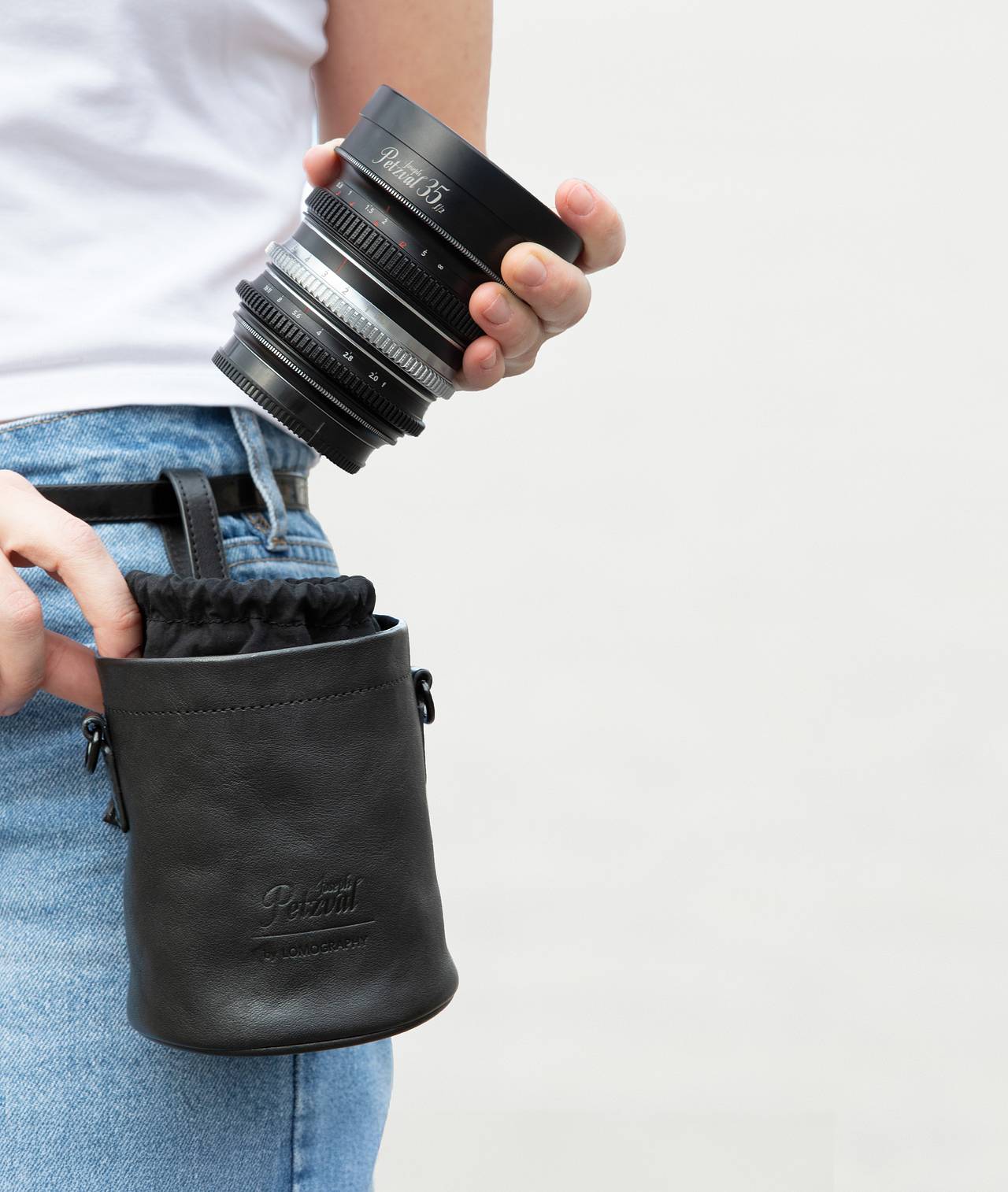
Secure storage featuring a belt loop and strap mounts, soft lining and drawstring closure.
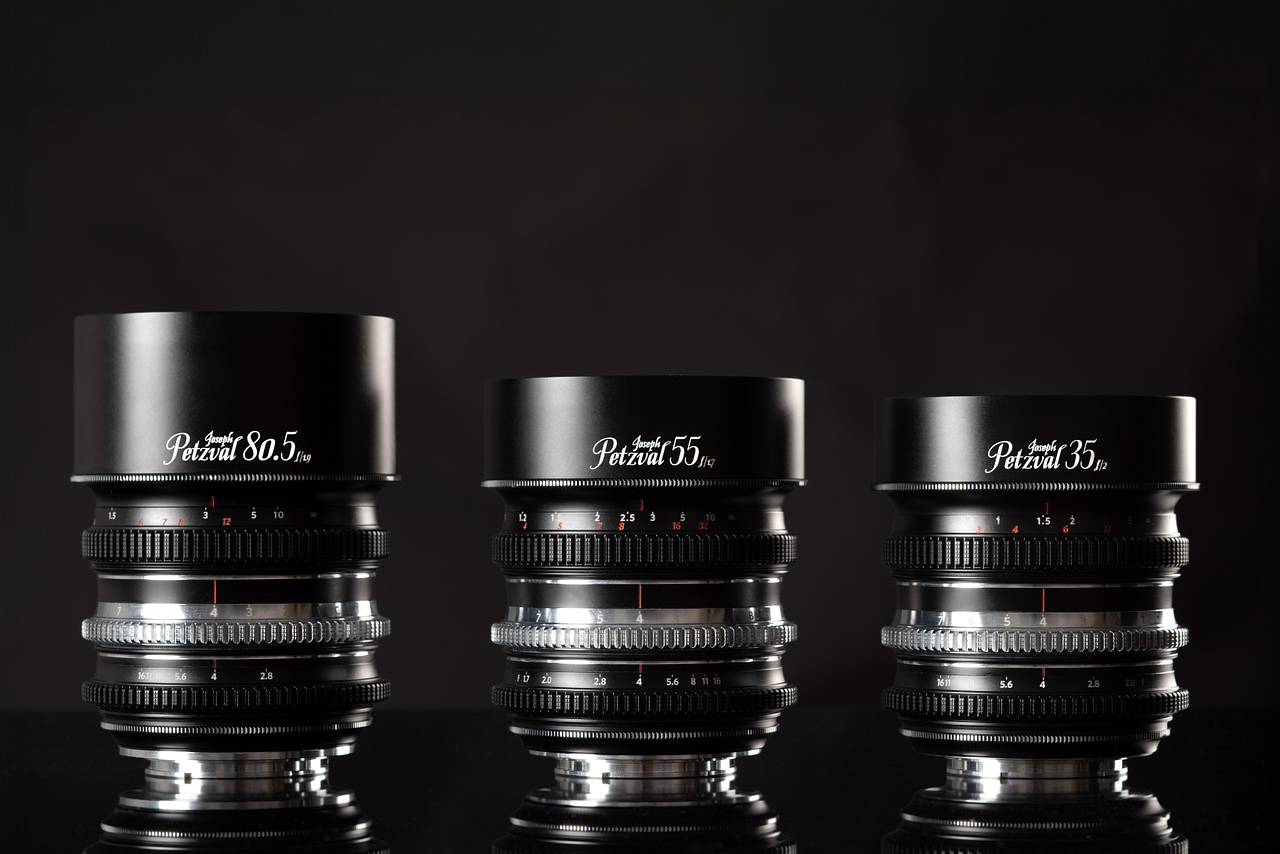
Durable protection for your favorite lenses.
Carry your Petzval lenses in style in this 100% leather lens pouch.
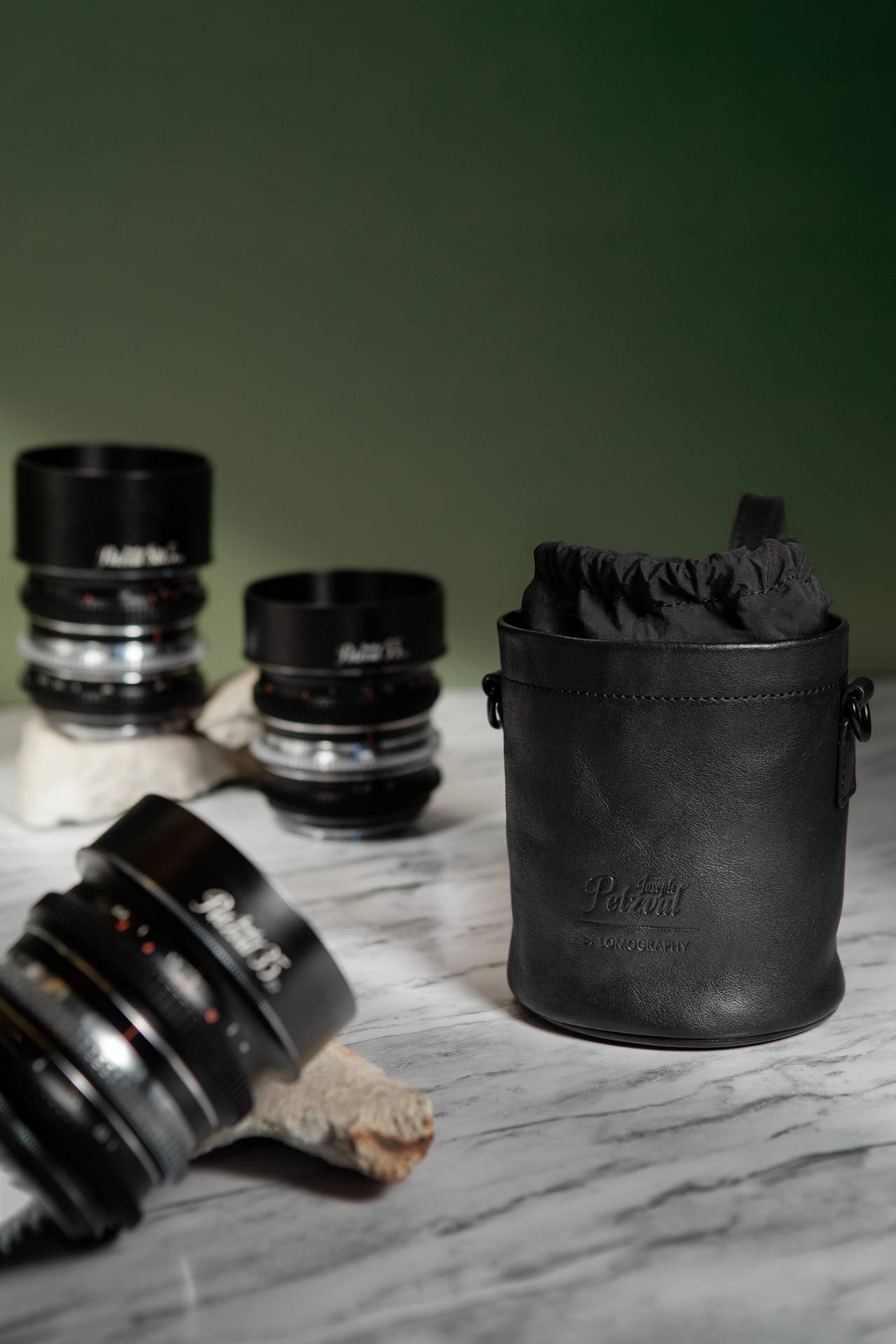
Carry any lens measuring no more than 100 mm × 125 mm × 100 mm.
Story
Slip your precious lenses into this leather pouch like the refined, responsible person you pretend to be. It’s perfect for situations where you want strangers to think you’re a professional, even if secretly you have no idea what you are doing. Also suitable for safeguarding precious objects like mysterious heirlooms, fancy rocks, stray marsupials or anything you want to carry around while silently flexing your impeccable taste in storage bags.
Compatible with the Joseph Petzval 27 mm, 35 mm, 55 mm and 80.5 mm Art Lenses, and other lenses measuring no more than 100 × 125 × 100 mm, this 100% leather lens pouch features a belt loop and strap mounts so you can carry your lenses securely wherever you go. With a soft lining and drawstring closure, your lenses will stay safely protected from harm.
Lomography Art Lens Family
Lomography Art Lenses feature the finest glass to produce photos that astonish with saturated colors and unique character. As well as being designed and assembled by hand, these lenses have been engineered using modern techniques and multi-coated glass elements to produce vibrant, strong, wonderful photos with a whole range of contemporary cameras. Each Lomography Art Lens brings a wide variety of creative possibilities with it, no two are the same.
Lomography Petzval Art Lenses
In 1840, in Vienna, Professor Joseph Maximilián Petzval invented the very first portrait lens. His groundbreaking design became the most widely used in the 19th century. We have been reinventing this amazing original since 2013. Our quest to translate this unique optical design into lenses that would work with modern-day cameras has resulted in four extraordinary Art Lenses to date. The New Petzval 85, the New Petzval 58 Bokeh Control, the New Petzval 55 f/1.7 MKII and the New Petzval 80.5 f/1.9 MKII.
Who was Joseph Maximilian Petzval?
Joseph Petzval was born on 6 January 1807 in the Hungarian part of the Austro-Hungarian Empire – modern-day Slovakia. In 1835, at the tender age of 28, his reputation as an exceptional mathematician earned him the title of Professor. He also founded his own glass-sharpening workshop, where he acquired a reputation for being a skilled lens sharpener and precision mechanic. It is here where his acclaimed brainchild – the Petzval lens – was born.
On 9 January 1839, the French Academy of Sciences announced the daguerreotype process, the invention of French artist and physicist Louis Daguerre. It was the first-ever photographic process and involved photos being printed on silver plates. But, with exposure times needing to last half an hour or more, portraits were impossible.
A little further east, Vienna was also a fruitful place for science and innovation at this time. Petzval was affected by a great hope among scientists to discover previously unseen things in the world and he specifically believed that math had a higher calling, namely to uncover nature. By May 1840, Petzval finished his latest lens calculations and handed them over to the company Voigtländer & Sohn. This new lens design was the first to be based on scientific calculations, not just the experience of the optician. This first lens sealed the company’s global reputation as a leading camera manufacturer. It won awards with Voigtländer and Petzval both receiving standing ovations for the precision of the camera’s shots, which took just a few seconds to take.
Joseph Petzval’s Legacy
While Petzval may have gained significant recognition for his work on the Petzval lens he, unfortunately, did very little to protect his intellectual property rights. Peter Wilhelm Friedrich Voigtländer manufactured the Petzval lens as part of the conical Voigtländer camera and thus made a fortune off the sales of the camera and Petzval lens.
In the 1850s, Petzval was approached separately by the Military Geographic Institute to develop his previously attempted landscape lens. By 1854 he had finalized his invention and collaborated with Viennese optician Carl Dietzler, who manufactured the lens to fit onto a suitable camera. Petzval’s former business partner Voigtländer had also started production of a landscape lens called “Orthoskop.” Though equal in sharpness, Petzval’s lens was three times faster and significantly smaller. Despite this victory, it turned out that Carl Dietzler was bankrupt and his company had to be dismantled. To top it all off, the rights for Petzval’s landscape lens were eventually handed over to Voigtländer, who became the main provider for the military.
Joseph Petzval passed away on 19 September 1891. While his later years were plagued by the tumultuous unraveling of his original lens design, his legacy in the photographic world rightfully lives on today.
Bokeh or Not Bokeh
The word Bokeh describes one of the most important optical features of the New Petzval Lenses. But what does the word actually mean? Bokeh is the visual quality of the out-of-focus areas of a photographic image, especially as rendered by a particular lens.
The New Petzval lenses don’t just give you a basic Bokeh, you can get what we like to call “Swirly Bokeh”. Unlike modern lenses designed to minimize field curvature, thus eliminating any curve across the focal surface, the Petzval lens design embraces the curve and renders photos with a totally different optical effect. This lens renders crystal clear in-focus images that seamlessly transition to silky-smooth out-of-focus areas. It provides velvety watercolor bokeh when shot wide open. When stopped down to smaller apertures, the lens displays extreme sharpness across the frame. Combined with versatile focal lengths, they creates three-dimensional portraits, evoking the style of the earliest photographs.
Question & Answers
What lenses is the Leather Lens Pouch compatible with?
This lens pouch fits the Joseph Petzval 27 mm, 35 mm, 55 mm and 80.5 mm Art Lenses, as well as any other lens measuring no more than 100 × 125 × 100 mm.
Manufacturer
Lomographische GmbH
Kaiserstraße 34/12, 1070 Vienna, Austria
help@lomography.com
Safety & Handling
- Choking Hazard: This is not a toy.
- Not intended for children under 12 years
EU Extended Producer Responsibility (EPR) Information
As part of our commitment to sustainability, we take responsibility for the entire lifecycle of our Lomography Products, including proper waste management and recycling. Read up on the policy here.
Package Contents
1 × Joseph Petzval Leather Lens Pouch